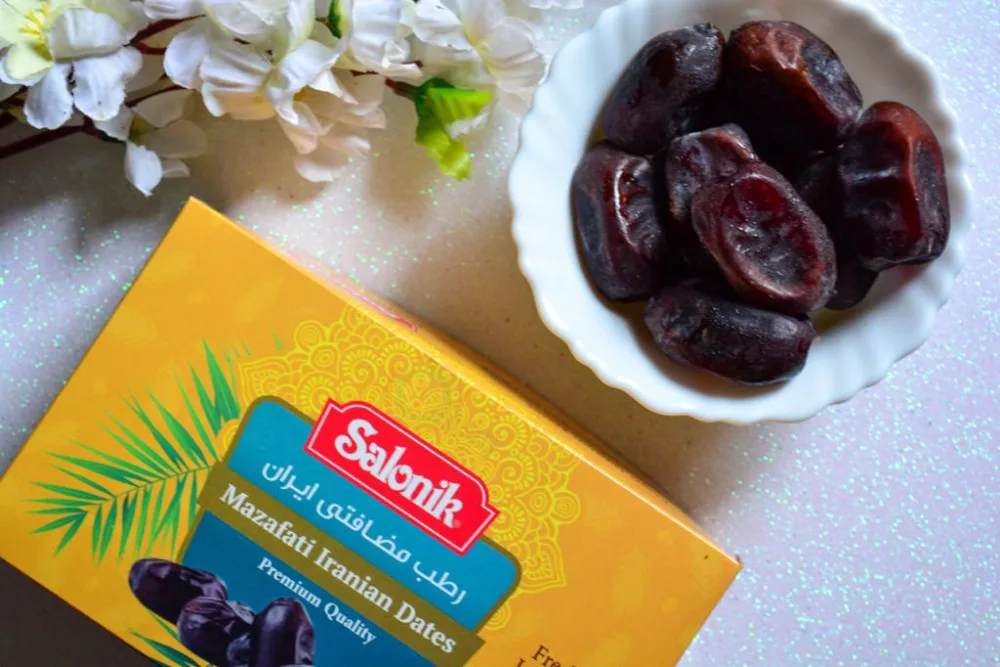
Sayer dates — also known as Stamaran — may not be as famous as Mazafati among Indonesian consumers, but on the global market it is one of Iran's most important dates. According to Iranian date-industry sources (amootiranian.com) and regional importer references, Sayer accounts for roughly 40% of Iran's total date exports, with volumes exceeding 80,000 tonnes per year. For resellers, shop owners, and bulk buyers, Sayer offers a rare combination: good quality, long shelf life, and an economical price. This article covers Sayer thoroughly, from origin to bulk-buying strategy.
Origin: The Heart of Khuzestan's Date Groves
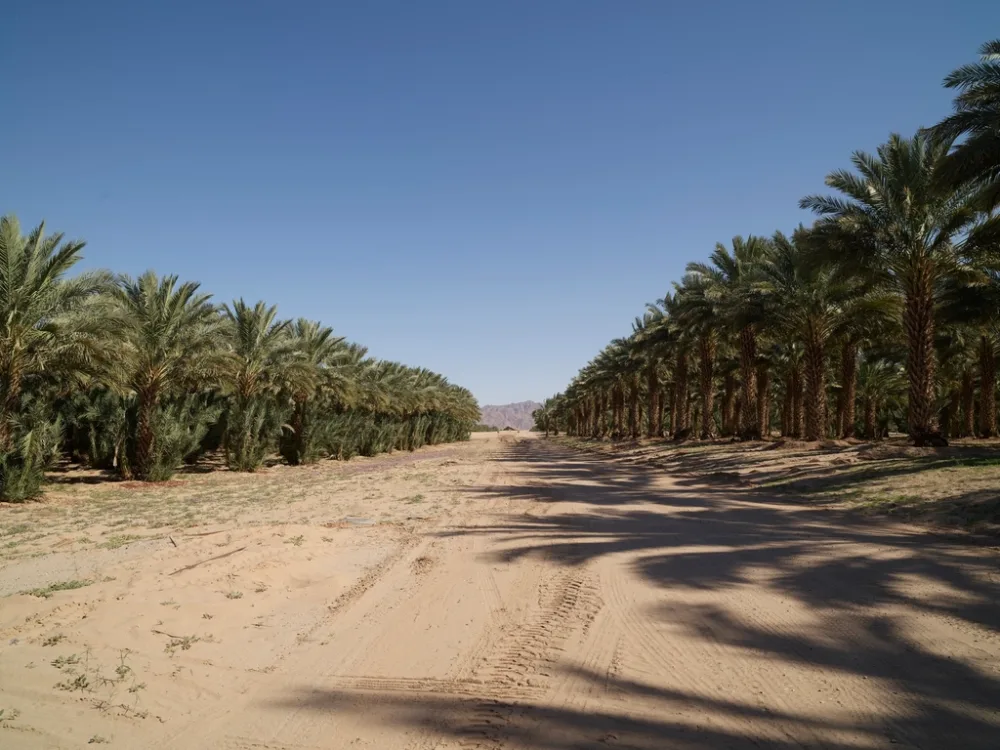
Sayer is cultivated mainly in Khuzestan Province, southwestern Iran, the country's largest date-growing region. References note that Sayer palms dominate much of Khuzestan's plantations, many grown organically without pesticides. Khuzestan's hot-dry climate yields a semi-dry date with around 16–18% moisture — soft enough to enjoy directly, yet dry enough to last. Each Sayer palm can yield roughly 80–120 kg per year, making it a high-yielding variety that sustains large export volumes.
Distinctive Traits of Sayer Dates
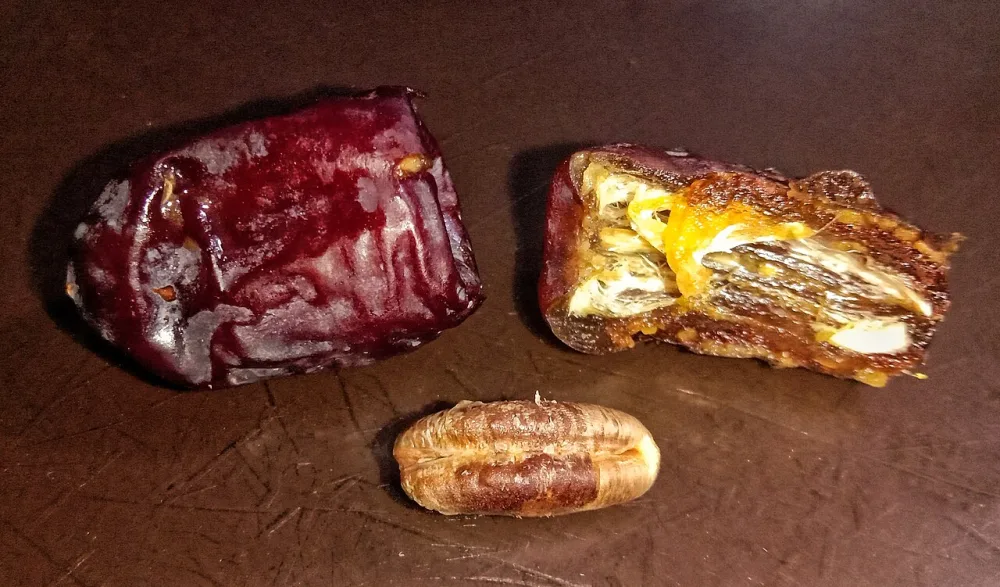
- Colour — reddish to dark brown, often glossy.
- Shape & size — oval, medium, tending smaller than Mazafati.
- Texture — semi-dry, soft fibrous flesh, less sticky than wet dates.
- Flavour — balanced moderate sweetness, less intense than Mazafati, suiting many palates and cooking uses.
- Shelf life — its key strength: Sayer keeps for around 12–18 months, approaching 2 years, without special refrigeration.
Quick Iranian-Variety Comparison Table
| Variety | Type | Moisture | Shelf Life | Price Position |
|---|---|---|---|---|
| Mazafati (Bam) | Wet | 15–35% | Needs cooling, 4–6 months | Mid-premium |
| Mariami/Piarom | Semi-dry | 15–18% | Durable, room temp | Premium |
| Sayer (Stamaran) | Semi-dry | 16–18% | 12–18 months no cooling | Economical |
| Zahedi | Dry | 12–14% | 2–3 years | Most economical |
Nutrition & Uses
Like dates generally, Sayer is rich in fibre, potassium, and carbohydrate as a quick energy source. As a general dried-date nutrition reference (USDA Deglet Noor): per 100 grams provides about 282 kcal, 75 grams carbohydrate, 8 grams fibre, and around 656 mg potassium. Thanks to its balanced sweetness and economical price, Sayer is very popular as a raw material for date syrup and processed products. Educationally, note that when dates are turned into syrup, some fibre is lost, so syrup tends to raise blood sugar faster than whole dates. Sayer is also ideal for mass iftar, cake fillings, and granola mixes because it is easy to chop.
Why Sayer Is Ideal for Bulk & Resellers
- Long shelf life without cold storage — reduces loss risk from slow-moving stock, unlike Mazafati which needs cooling.
- Low capital cost — more flexible margins, suited to price-sensitive markets, especially before Ramadan.
- Steady demand — as a daily date and processing material, Sayer is needed year-round, not just seasonally.
As an Iranian-dates specialist, we offer Sayer from retail packs to 5 kg, 10 kg cartons and loose bulk for resellers. If you are comparing economical options, our Iranian-dates wholesale price guide details the per-pack price ladder so you can calculate margins precisely.
Price Range & How to Buy Sayer in Bulk
As an economical date, Sayer sits in a lower price segment than Mazafati or Mariami. Marketplace surveys show similar dates in retail packs across a very wide range—from tens of thousands to hundreds of thousands of rupiah depending on packaging and brand. For bulk buying, the per-kilogram price usually drops significantly when purchasing by the carton (e.g., 10 kg) versus retail. Here is a typical buying ladder:
| Packaging | Target Buyer | Price Note |
|---|---|---|
| Retail 500 g–1 kg | Household consumers | Highest per-kg price |
| Carton 5–10 kg | New resellers, small shops | More economical per kg |
| Bulk 30 kg+ | Distributors, processors | Most economical per kg |
Since date prices fluctuate before Ramadan, request the latest price list before large orders. Buying early (well before peak season) often yields steadier prices and more reliable stock availability.
Organic Cultivation & a Sustainable Footprint
One of Sayer's selling points is how it is grown. Many Sayer groves in Khuzestan are cultivated without pesticides, relying on the dry climate to naturally suppress pests. Date palms are also perennials productive for decades, so their environmental footprint is relatively efficient compared with many seasonal crops. For consumers who value natural production and resellers wanting to highlight "organic" appeal, Sayer offers an authentic product story—provided organic claims are not overstated without formal certification.
Sayer Bulk-Buyer Checklist
- Confirm Iranian origin — some dates are marketed as "Sayer" or "Red Sayer" from other sources; confirm yours is genuinely Iranian Sayer (Khuzestan).
- Check moisture & cleanliness — choose dry-glossy, mould-free pieces that are not damply clumped.
- Ask remaining shelf life — though durable, know when the dates were harvested/imported for optimal stock rotation.
- Calculate realistic margins — compare carton vs retail pricing to set a competitive resale price.
- Consider repackaging — Sayer suits repacking into 250 g–1 kg retail packs, adding value.
Choosing & Storing Sayer
Choose Sayer with a dry-glossy surface, no mould, and no fermentation odour. Being semi-dry, Sayer keeps well in a tightly sealed container in a cool, dry place; refrigeration is optional but can extend freshness in Jabodetabek's hot climate. For bulk stock, keep cartons away from direct damp and sunlight so quality holds for months.
Conclusion
Sayer is the workhorse of Iran's date exports: from Khuzestan, semi-dry, lasting 1–2 years, with balanced sweetness and an economical price. For consumers, it is a wallet-friendly daily date; for resellers, it is a safe, profitable stock choice. If you want quality Iranian dates with low storage risk, Sayer belongs near the top of your list.